SB 253 Deadline: August 10, 2026

California Climate Disclosure Compliance

California's SB 253 and SB 261 are reshaping how large companies report their greenhouse gas emissions and climate risks — with real consequences for wine, food & beverage, and agriculture companies up and down the supply chain.

I bring 15+ years of hands-on sustainability expertise in California's food and beverage industry — including 9 years as Sustainability Director at one of the state's largest wine companies. I speak your industry's language, and I know what your Scope 3 inventory actually looks like.

Book a Complimentary Assessment
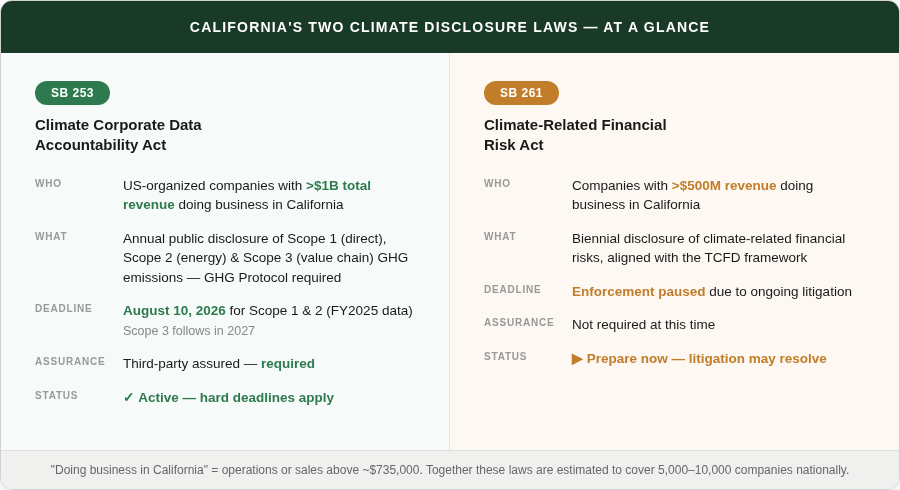
California's Two Climate Disclosure Laws — SB 253 vs SB 261 at a glance

Understanding the Two Laws

Active — Act Now

SB 253 — Climate Corporate Data Accountability Act

Requires U.S.-organized entities with more than $1 billion in annual revenue doing business in California to publicly disclose Scope 1, 2, and 3 GHG emissions on an annual basis.

~2,600 companies subject to SB 253
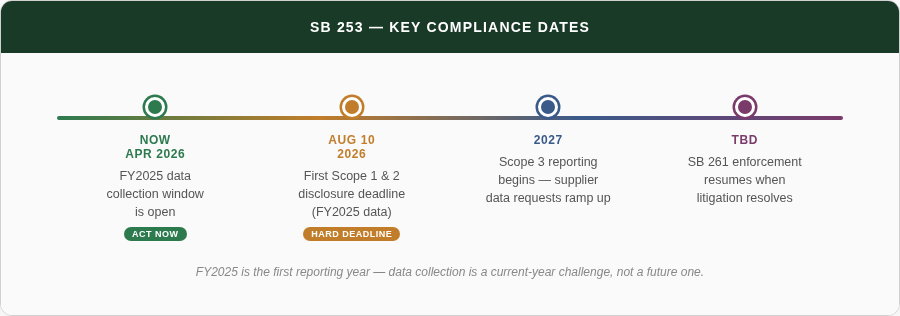
Scope 1 & 2 first reporting deadline: August 10, 2026
Scope 3 reporting commences 2027 or later
Voluntary — Injunction in Effect

SB 261 — Climate-Related Financial Risk Act

Requires companies with more than $500 million in revenue doing business in California to biennially disclose climate-related financial risks and their plans to address them. Currently under a Ninth Circuit injunction — reporting is voluntary while litigation continues.

~4,100 companies subject to SB 261
Ninth Circuit injunction pauses mandatory reporting
Aligned with TCFD climate risk disclosure frameworks
SB 253 Key Compliance Dates — timeline from April 2026 through 2027

What This Means for Wine, Food & Beverage

Food and beverage is directly in scope. The law covers global agri-food giants — companies like Tyson Foods, Dairy Farmers of America, Del Monte Foods, Nestlé, E. & J. Gallo Winery, Blue Diamond Growers, and many others operating in California. These companies are now legally required to disclose their full Scope 3 value chain emissions.

That means they are looking at every supplier. If you sell to a company covered by SB 253, you will receive supplier questionnaires, emissions data requests, and new compliance expectations you may never have encountered before.

And here's the bigger picture: the real opportunity isn't just the 2,600 directly covered companies — it's the tens of thousands of suppliers in their value chains. A $200M winery selling to a major grocery chain or a large wine group is going to feel this law even if they're below the revenue threshold.

The Key Insight

The generic ESG platforms and Big 4 consultants covering this space don't understand how Scope 3 flows through a winery's value chain, what a vineyard's Scope 1 actually looks like, or how to translate GHG protocol into terms that make sense in your world. I do — because I've built these inventories from scratch, at scale, in your industry.

F&B Companies Directly in Scope

  • E. & J. Gallo Winery
  • Tyson Foods
  • Nestlé USA
  • Dairy Farmers of America
  • Del Monte Foods
  • Blue Diamond Growers
  • Sysco Corporation
  • US Foods
  • Other major food & bev manufacturers

Not directly covered? Your largest customers likely are. As Scope 3 reporting becomes mandatory, supplier data requests will cascade throughout the entire food & beverage supply chain — including companies well below the $1B threshold.

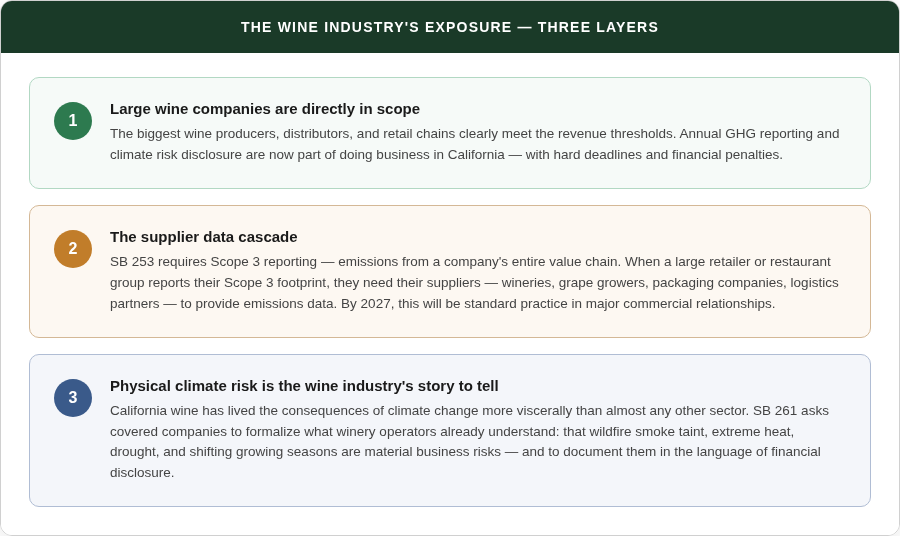
The Wine Industry's Exposure to SB 253 — three layers of impact

Why Work With Me

Deep Industry Roots

15+ years in California's food, beverage, and wine industry — including 9 years as Sustainability Director at one of the state's largest wine companies. I've built GHG inventories, managed Scope 3 supplier programs, and navigated the exact compliance landscape your business faces.

SB 253-Ready Methodology

I use GHG Protocol-aligned methodologies that meet the SB 253 reporting standard. Your Scope 1, 2, and 3 inventory will be built to withstand scrutiny — whether from CARB, your customers, or your investors. No guesswork, no generic templates.

Boutique Attention, Enterprise Results

As a specialized boutique practice, I work directly with your team — not a junior analyst. You get personalized guidance tailored to your operations, your supply chain, and your timeline, without the overhead of a Big 4 engagement.

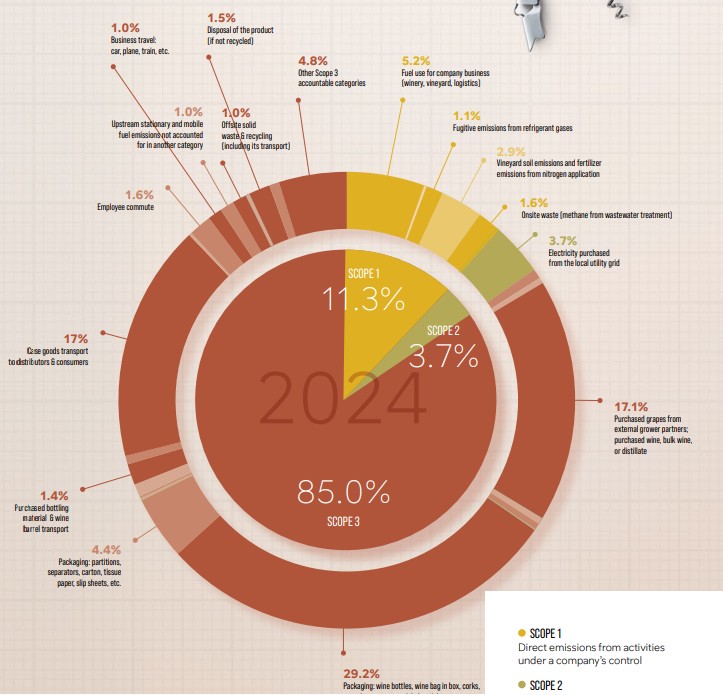
IWCA GHG emissions breakdown by scope GHG emissions breakdown by scope — built for food & beverage operations
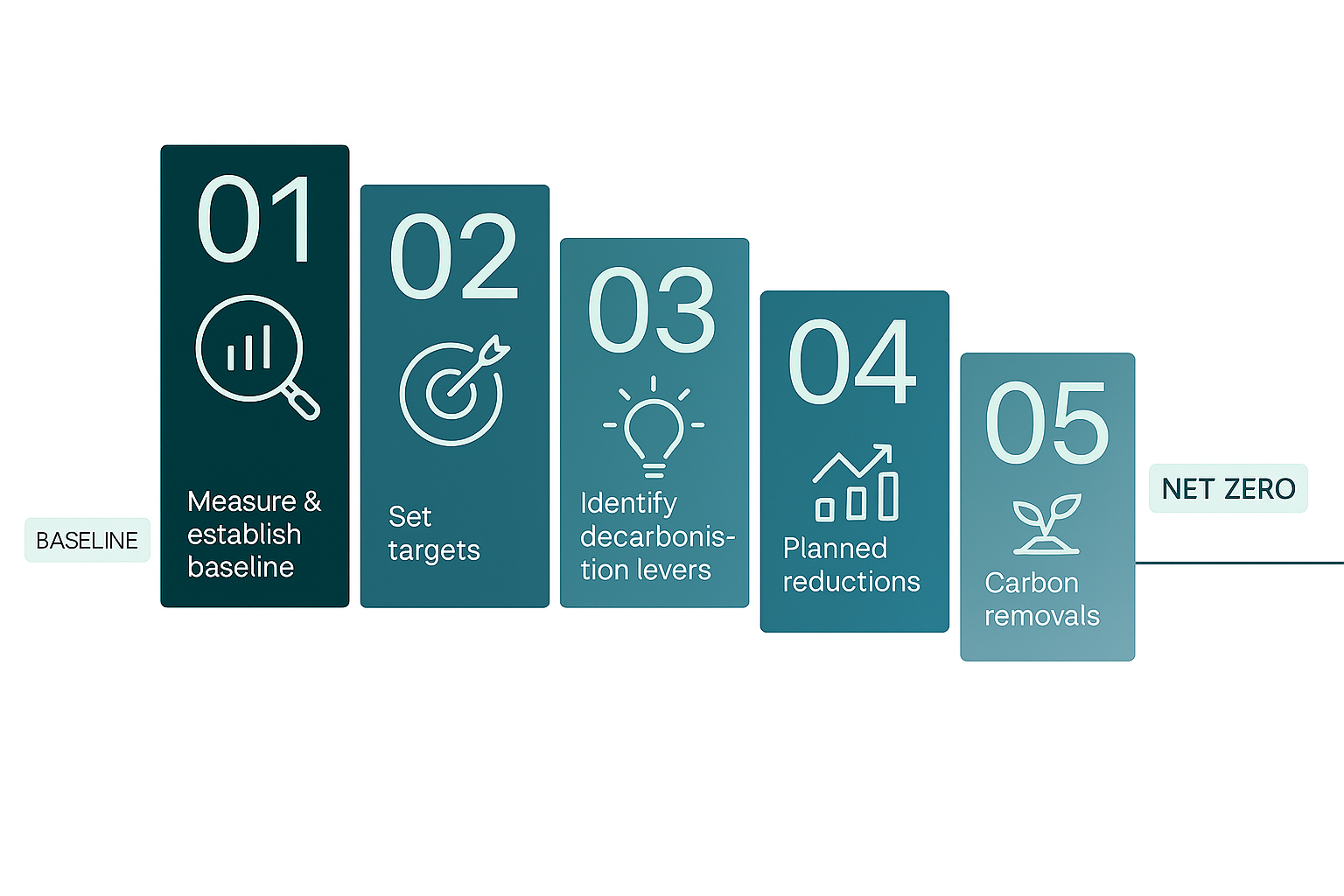
Decarbonization planning Decarbonization strategy built for your business and budget

What We'll Work On Together

My SB 253 compliance engagement is built for wine, food & beverage, and agricultural companies that need a credible, defensible GHG inventory — delivered by someone who actually understands how your business runs.

  • SB 253 Readiness Assessment

    I start with a complimentary assessment to evaluate where you stand — what data you have, what gaps exist, and how much effort your full compliance program will require. No sales pitch, just an honest picture.

  • Scope 1 & 2 GHG Inventory

    Complete inventory of your direct (Scope 1) and purchased energy (Scope 2) emissions, built to GHG Protocol standards and ready for the August 10, 2026 reporting deadline.

  • Scope 3 Value Chain Analysis

    Mapping and quantification of your value chain emissions — including purchased goods, agricultural ingredients, transportation, and waste. Particularly critical for food & beverage companies, where Scope 3 often represents 70–90% of total footprint.

  • Hotspot & Heat Map Analysis

    Visual analysis of your highest-impact emission sources across Scope 1, 2, and 3. Gives you and your team a clear picture of where to focus reduction efforts first.

  • Supplier Data Program

    For companies with complex supply chains — I help you design and execute a supplier engagement program to gather the primary data your Scope 3 inventory requires.

  • Disclosure-Ready Documentation

    Full methodology documentation, data sources, assumptions, and audit trail — everything CARB and your stakeholders will need to verify your disclosures.

  • Reduction Roadmap

    Beyond compliance, I help you build a credible decarbonization plan that turns your SB 253 inventory into a strategic asset — for investors, customers, and certifications alike.

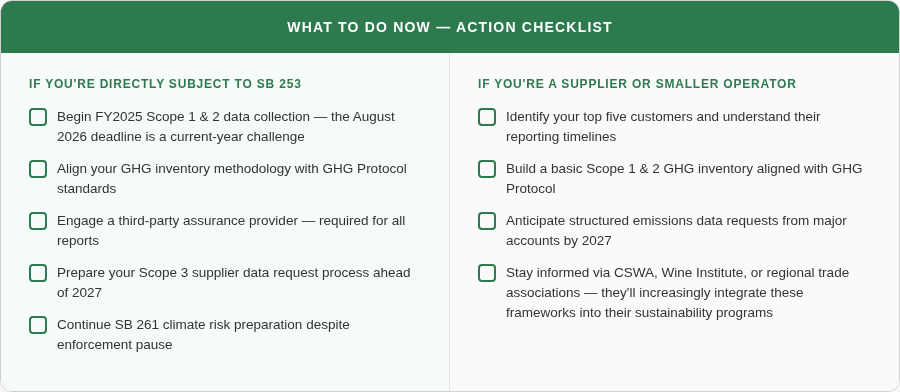
What to Do Now — SB 253 action checklist for covered companies and suppliers
August 10, 2026 Deadline for Scope 1 & 2

Start With a Complimentary SB 253 Assessment

Not sure where to begin? I offer a no-cost, no-obligation assessment for food, beverage, and wine companies navigating California's climate disclosure requirements. We'll spend 45–60 minutes reviewing your situation and walk away with a clear picture of your compliance needs and next steps.

01

Book Your Assessment

Send me a message through the contact form. I typically respond within one business day.

02

Readiness Review

I review your current data, operations, and supply chain to assess what your SB 253 compliance program requires.

03

Clear Next Steps

You leave with an honest assessment of your situation and a practical roadmap — whether we work together or not.

"Aaron is exceptionally smart, thoughtful, and dedicated, combining deep technical expertise with a work ethic that consistently delivers results. He's one of the most reliable and genuinely great people I've collaborated with, and I highly recommend him to any organization seeking top-tier sustainability consulting."
Josh Prigge Sustainability Consultant, Sustridge
Book Your Complimentary Assessment